
Casinos That Accept E-Cheques in the UK: What to Check
 Available in GB
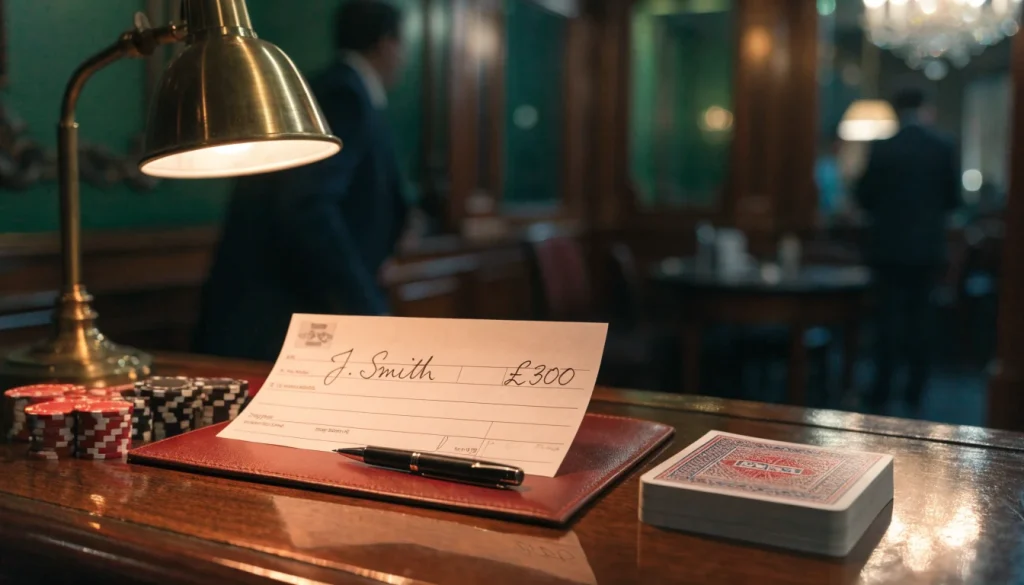
Payment access, limits, fees, matching account details and bank-transfer timing all shape whether an e-cheque route suits a UK account.
What to Check Before Choosing an E-Cheque Casino
If you are looking for casinos that accept e-cheques in the UK, treat the cashier as the point where availability must be confirmed. A payment logo, a general list of banking options or a page describing e-cheques does not establish that you can use this route on a UK account today. Payment options can differ by country, account and transaction type, so do not rely on a method until it appears in the cashier for your account.
The distinction matters because a site may mention a payment service without making it available to every customer. A method might be listed in an old help page, an introductory article or a general payment overview, while the current cashier presents a different selection. Even a current-looking page may describe the operator’s wider payment range rather than the options open to UK customers. Read any payment information as a prompt to check, not as confirmation.
Check the cashier, not just the payment page
Before choosing a casino for an e-cheque deposit, sign in or use the operator’s permitted pre-registration information to inspect the cashier. Look for the exact payment method name and check that it is presented as a deposit option for your account and location. If the method is absent, do not assume that a customer-support answer, a search result or a third-party description can make it available.
Casinos that accept eChecks in the UK: what to check
A cashier entry is more useful than a logo because it relates to the transaction screen you would actually use. Still, check the wording carefully. A payment method may be shown for withdrawals only, or a page may describe a service without specifying whether it can fund a gambling account. The relevant confirmation is that the casino offers it for the transaction you intend to make.
If you cannot see the option until registration, ask the operator whether e-cheques are currently supported for UK customers and whether the answer applies to deposits. Keep the question specific. “Do you accept e-cheques?” can produce an ambiguous reply if support is discussing the site generally, rather than your account or the deposit route. A clear answer should identify the method and its availability to a UK customer.
Do not treat a payment list as a promise
Casino payment pages can be useful for understanding the kinds of methods an operator discusses, but they are not interchangeable with the live cashier. A site may name Visa and Mastercard alongside other payment categories; that does not prove that every listed option is enabled for every UK account. Specialist review pages can also describe payment methods that were visible when checked, or that apply in another market. Confirm the current position with the operator before relying on any listing.
Casinos That Accept EntroPay in the UK
This is particularly important when a method has several forms or product types. A name may refer to a service that supports different transaction arrangements, while only some are available to a particular customer. Do not infer that a method will work simply because its brand or category appears on the site.
An e-cheque description may also explain how the payment type works without saying that the casino accepts it. Separate general information from an actual deposit option: does the operator say the route is available to UK customers, and can you select it when making a deposit? If either point is unclear, pause before choosing the casino on that basis.
Choose on confirmed availability
A shortlist of e-cheque casinos should not be built from names alone. For each site you are considering, establish whether the operator serves Great Britain under a current UK Gambling Commission licence, then check the cashier for the payment route. Remote gambling licensees selling into the British market must hold the relevant UK licence; an e-cheque listing is not a substitute for checking that the casino is legally available to you.
Once you have checked the licence and payment option, make sure you understand what the cashier is offering before you proceed. If e-cheque is not displayed or the operator cannot confirm that it applies to UK accounts, treat it as unavailable for your decision. A casino may still offer other payment methods, but those do not turn an unconfirmed e-cheque route into a supported one.
Attention: A payment logo or a general list of banking options does not confirm that a method is currently available for your specific UK account.
The practical question is not whether a website has ever mentioned e-cheques. It is whether the casino currently presents that payment route to you, in the UK, for the transaction you plan to make. Confirm that directly before registering or depositing on the assumption that e-cheque will be available.
Top online casinos in the UK
- NightWinBonus: £900 + 400 free spins · Payout speed: 1-3 business days
- SpinFormulaBonus: 550% Up To £15,000 + 550 FS · Payout speed: 1-3 business days
- EvoSpinBonus: 125% up to €2500 + 125 Free Spins · Payout speed: 1-3 business days
- DieselwinBonus: Welcome Pack 250% up to £4000 + 200 FS · Payout speed: 1-3 business days
- x3betBonus: Welcome Pack 100% Up to £1.000 + 200 Free Spins · Payout speed: 1-3 business days
- NightLuckBonus: Welcome Pack + 805% Up To 6400€ + 280 FS · Payout speed: 1-3 business days
Confirm the Payment Route Works for Your Account
A payment method appearing in a casino review does not prove that you can use it from a UK account. The option may be unavailable for your location, account, or chosen transaction. For an e-cheque, check the cashier while signed in before treating it as a workable deposit route. If it is not listed there, do not assume that a general payment-method description means the casino accepts it.
Specialist casino-payment review pages examined for this topic mention Visa, Mastercard, bank transfers, e-wallets and several cryptocurrencies. That gives you an idea of the other categories those pages discuss; it does not establish that e-cheques are supported. Nor does a payment logo elsewhere on a site confirm that the method is enabled for your account. The cashier is the place to verify what is actually offered to you.
Casinos That Accept Ethereum in the UK
Check the options shown in your cashier
Open the deposit area of your account and look for the exact method name. Do not treat terms such as “bank payment” or “electronic payment” as interchangeable with “e-cheque” unless the operator’s own description makes that clear. A method can sound similar without being the same route, and selecting the wrong option may take you into a process you did not intend to use.
Read the method’s instructions before proceeding. Check whether the cashier identifies it as a deposit method, what details it asks you to enter, and whether the instructions are consistent with the e-cheque service you expect to use. If the option is absent, unclear, or named differently, contact the casino’s support team and ask specifically whether e-cheque deposits are available to a UK customer on your account. Keep the answer in writing so you can refer to it if the cashier’s display does not match.
Availability can also depend on the account state. A method might be visible to one customer but not another, or may appear only after you sign in. That is why a payment list on a public page should be treated as a starting point rather than a confirmation. Check the cashier itself, and do so before entering payment details or choosing a casino on the assumption that this route will work.
Separate payment categories from exact methods
A broad category does not tell you which individual services are enabled. “E-wallets”, for example, does not identify a particular wallet or confirm that it is offered to you. Likewise, a mention of bank transfers does not mean that every bank-based payment route is available. If you are looking for an e-cheque specifically, ask about that exact method rather than relying on a nearby category label.
Do
- Open the deposit area of your signed-in account
- Look for the exact payment method name
- Contact support for written confirmation
Don’t
- Treat “bank payment” as interchangeable with “e-cheque”
- Rely on a payment logo elsewhere on the site
- Assume a general category label confirms a specific method
The same distinction applies to cards and other listed options. Specialist review pages may name Visa or Mastercard, but the cashier must still show which choices are available for your account. UK-licensed casinos cannot accept credit-card payments for gambling, so do not assume a card can be used simply because a card brand appears in a payment list. A displayed brand is not a guarantee that every card product is eligible.
If you are considering another method because an e-cheque is not shown, confirm the precise payment route and its purpose before selecting it. Paysafecard, for instance, is deposit-only; the name of a payment method alone does not tell you whether it supports the transaction you intend to make. Check the cashier’s wording rather than inferring deposit or withdrawal availability from a logo or a general list.
Confirm currency before authorising anything
Specialist review pages for the sites examined state that GBP is supported, but that does not settle the currency setting on your own account. Check the currency displayed in your account and in the cashier before making your first transaction. If the account is set to another currency, a payment may involve conversion even when you are paying from the UK.
Make sure the amount shown at the confirmation stage is in the currency you expect. If the cashier does not make the currency clear, pause and ask support before authorising the payment. Do not rely on a review page’s general currency statement as proof of your account’s setting: the detail that matters is what your signed-in account displays.
Casinos That Accept Bank Cheques in the UK
A clear check is simple: the cashier names the exact method, shows that it is available to your account, explains the transaction route, and displays the currency you expect. If any of those points is uncertain, get clarification before continuing. That gives you a sound basis for deciding whether the casino’s available payment options match your needs, without mistaking a broad payment list for confirmation that it accepts e-cheques.
Compare the Deposit and Withdrawal Journey
A deposit and a withdrawal are separate stages, even when you use the same payment route for both. A payment showing as successful tells you that the money reached the casino account; it does not tell you how quickly a later withdrawal will be approved or delivered. When assessing an e-cheque option, treat the two directions as distinct parts of the journey rather than assuming that a quick deposit predicts a quick payout.
A specialist review describes a card deposit as potentially instant, while a payout may take several business days. That is a useful illustration of the difference, not a timetable you can apply to every casino or payment method. The deposit may be credited as soon as its payment stage is complete, whereas a withdrawal still has to pass through the casino’s own approval process before it can be sent on. The time shown for one stage should not be read as a promise about the other.
A deposit may be credited as soon as its payment stage is complete, whereas a withdrawal must first pass through the casino’s internal approval process.
Separate approval from delivery
When you request a withdrawal, the casino first has to process the request internally. Only after approval can the payment continue through the chosen route. So an estimate that refers to payment processing may not describe the whole period from pressing the withdrawal button to seeing funds in your account. Check what the casino’s stated time actually covers: the approval stage, the payment-provider stage, or both.
The casino’s internal review matters because it is part of the transaction, not a delay you can measure from the deposit screen. A specialist review notes that withdrawal processing can take longer for a first withdrawal while verification is completed. That does not mean every first request will be held for the same length of time, or that later requests will follow an identical pattern. It does mean you should avoid treating a first payout as equivalent to a deposit that has already been accepted.
If you are comparing casinos that mention e-cheques, look for a clear explanation of withdrawal processing as well as deposit instructions. A deposit-focused description leaves an important part of the journey unanswered. Check whether the published estimate starts when you submit a request or only after the casino approves it, and whether the casino explains how it will tell you if more information is needed. Where the wording is unclear, ask before depositing rather than relying on an assumption.
Casinos That Accept Tether in the UK: What to Check
Read timing claims carefully
Payment descriptions can use words such as “instant” or “fast” without making clear which transaction they refer to. On a cashier page, an instant deposit claim concerns money going into your casino balance. It does not establish that withdrawals through the same route are instant, nor does it show how long internal approval takes. A withdrawal estimate may also be expressed separately from the time needed for the payment to reach you.
For a mobile e-cheque casino, the same distinction applies whether you use a phone or a computer. The device used to submit a request does not, by itself, tell you when the funds will arrive. Read the withdrawal information before making a deposit, and keep a record of the stated process. If the cashier presents a deposit method but the withdrawal terms do not explain how payouts are handled, do not fill in the gap with the deposit speed.
A useful comparison is therefore not simply “which payment is quickest?” It is “what stages are included in the stated time, and what could pause the request?” Give particular attention to the casino’s internal approval and any mention of verification. A short estimate that begins only after approval can represent a longer overall wait than it first appears. Equally, a longer estimate may include several stages that another casino describes separately. Compare like with like.
Plan around the whole transaction
Before you deposit, consider whether you would be comfortable waiting through the casino’s review and payment processing if you later request a withdrawal. Avoid relying on a deposit completing quickly as evidence that winnings will be available just as quickly. If timing matters, check the withdrawal terms directly and seek clarification on any phrase that does not say when the clock starts.
Withdrawal Timing
- Distinguish between internal casino approval and the payment provider’s delivery time
- Be aware that first withdrawals may take longer due to identity verification
- Avoid treating a fast deposit as a guarantee of a fast payout
Keep expectations flexible, particularly for an initial payout. A specialist review identifies verification as a reason a first withdrawal may take longer, but the timing for an individual account depends on the casino’s process. Once you have submitted a request, use the casino’s account or support channel to check its status rather than repeatedly submitting a new request. A clear view of each stage makes it easier to understand whether a wait concerns casino approval or the payment journey after approval.
This approach is more reliable than choosing an e-cheque casino on a deposit-speed claim alone. Check the route’s withdrawal process, distinguish internal approval from onward payment, and make your decision using the full journey.
Check Deposit Limits and Account Controls
A payment route can have its own maximum deposit, while your account may also be subject to limits that apply across your activity. These are separate boundaries: one may stop a particular transaction from going through, while the other helps you control how much you can deposit over time. Check both before you fund an account, including if you are considering an e-cheque route.
The limits shown in a specialist review may not match the options currently available to you. Deposit caps can differ by payment method and account status, and an operator may change its terms. Treat a review as a prompt to check, not as confirmation of the limit on your account. The cashier and your account’s own limit settings are the places to confirm what applies at the time.
Casinos That Accept MuchBetter in the UK
Set a limit before depositing
UK Gambling Commission rules require remote gambling licensees to prompt new customers to set a financial limit before making their first deposit. They must also make account-level limit controls accessible. This gives you a chance to decide on a boundary before money is added, rather than setting one only after you have started playing.
Take the prompt seriously and choose a limit that fits your own budget. A limit is a control, not a reason to deposit up to its maximum. If the account offers different ways to set a financial boundary, read what each one covers and when it takes effect. Do not assume that changing a setting will apply immediately; check the operator’s explanation in the account controls.
If you already have an account, locate its limit settings before making another deposit. Confirm whether a displayed figure applies to deposits through all methods or only to a particular payment route. Where the wording is unclear, ask customer support to explain how the setting works before relying on it.
Check the payment and account caps
A transaction may be declined because it exceeds a payment method’s cap, even when your wider account limit has not been reached. The reverse can also happen: a payment method may permit a deposit that your account-level controls do not. Check the amount shown in the cashier and compare it with the boundary you have set for the account.
Account status can also affect the maximum available to you. Do not assume that a limit described in general terms applies unchanged to every customer. Look at the terms shown after signing in, and check whether they distinguish between a single transaction and deposits accumulated over a day or month. If the information is not clear, ask the operator to confirm the applicable limits before you proceed.
Account Limits
Do not use alternative payment routes to bypass financial boundaries you have set for your account.
This is a practical check, not a reason to test the system with repeated deposits. If a payment is refused or a limit is reached, stop and review your account settings and the operator’s explanation. Trying another route may not change an account-level boundary, and it should not be used to get around a limit you chose.
Keep control of changes
Use the account tools to review your limits periodically, especially if your circumstances or budget have changed. If you want to reduce a boundary, check how the operator applies that change and when it becomes active. If you are considering increasing one, pause before confirming it and make sure the revised amount remains affordable. The purpose is to keep your spending within a boundary you have chosen, not to make more funds available.
For an e-cheque deposit casino in the UK, the same distinction matters: any route-specific cap is only one part of the picture. Your account controls still matter, and the cashier’s displayed terms should be checked before you rely on a particular maximum. Keep the boundary you set in view and do not treat an available deposit limit as a spending target.
Understand Fees Before You Deposit
A payment route can appear to have no casino fee and still cost you money. The charge may come from the casino, the payment provider, your bank or card issuer, or the network used to process the transaction. If currency conversion is involved, the exchange rate can also affect the amount that reaches your casino balance.
A specialist payment review identifies these as possible cost points, rather than charges that apply to every transaction. Check the cashier’s fee information and the terms of the provider you would use; do not assume that a fee shown by one party is the only one to consider. If a charge is unclear, ask the relevant provider or the casino before confirming the payment.
Possible cost points
Charges may originate from the casino, the payment provider, your bank or card issuer, or the processing network. Additionally, if your account is not in pounds sterling, the exchange rate spread can affect the final amount.
Pay particular attention to the exchange rate if your account is not held in pounds sterling. The rate used for a transaction may include a spread: the difference between the market exchange rate and the rate applied to your payment. A specialist review notes that this can cost more than a visible flat fee. Compare the total amount you would pay with the amount credited, rather than judging the route only by a stated charge.
For an e-cheque payment, the same principle applies: check the actual terms shown for your account and transaction, rather than treating the method’s name as a complete cost breakdown. Do not infer that a fee is absent because the casino’s cashier does not display one. A bank, issuer or provider may set separate charges, and the terms can depend on the route used.
Before you approve a deposit, check:
- whether the casino displays a transaction fee;
- whether the provider or your bank may charge separately;
- which currency will be used and what exchange rate applies;
- whether network costs are listed in the payment terms.
There is no single payment method that can be called the cheapest without comparing the charges for the actual transaction. A flat fee may be easy to spot, while a less visible exchange-rate spread can change the final cost. Read the displayed amount and the relevant terms together, and proceed only when you understand what will be charged.
Keep the Deposit and Withdrawal Details Consistent
When you choose a payment route, check that the account behind it is yours and that its name matches the details on your casino account. Using payment and account information belonging to the same customer can reduce avoidable questions about who owns the funds. It does not guarantee that a transaction will pass every check, but it gives the operator fewer basic inconsistencies to resolve.
A straightforward approach is to use one named account consistently for deposits and withdrawals, where the casino’s rules allow it. Before confirming a payment, compare the name registered with the casino against the name held by your bank or payment provider. Pay attention to small differences, such as a different surname, a shortened first name or an old address in one account. If your details have changed, update them through the relevant account settings before making a transaction.
This is particularly worth checking if you are looking for an e-cheque casino. Do not assume that an e-cheque account is suitable simply because you can enter its details at the payment stage. The route and the casino account should relate to the same customer, and the cashier’s terms should explain what information is required. If the payment provider uses account details that do not clearly identify you, ask the casino how it handles that arrangement before depositing.
Casinos That Accept Neteller in the UK: What to Check
Avoid using another person’s bank or payment account, even with their permission. The casino may be unable to establish that the money belongs to you, and the resulting questions can hold up the transaction or require you to clarify the ownership. Shared access to an account does not necessarily make its registered owner and the casino customer the same person.
Keep your casino profile and payment account details current, and use the same spelling of your name wherever possible. If a payment is made from an account that is not in your name, do not try to correct the mismatch by changing details inaccurately. Contact the operator and ask what steps it permits instead.
For anyone comparing an e-cheque casino list in the UK, ownership consistency is a practical point to check alongside the cashier’s stated conditions. A route that fits your own account details is easier to explain than one involving mismatched names. This simple check can reduce avoidable friction without implying that every payment will be accepted or processed in the same way.
Know Where a Withdrawal May Be Sent
Before depositing, check how the casino says it will return any withdrawal. UK anti-money laundering controls commonly require funds to go back to the payment source used to deposit. This is part of a closed-loop approach: the route out may be restricted by the route in, even when another payout option appears in the cashier.
UK anti-money laundering controls often require withdrawal funds to be returned to the original payment source used for the deposit.
That matters if you are considering an e-cheque. Do not assume that a casino can send winnings to any bank account simply because it accepted a deposit by a particular route. Read the cashier’s withdrawal information and the payment terms, and check whether they explain where funds are sent if the original source cannot receive a payout. If the terms are unclear, ask customer support before making a deposit.
A different destination may be possible, but it can lead to additional checks. The casino may need to establish that you control the alternative account and that the transfer meets its anti-fraud and AML requirements. A request to use another destination is not necessarily a sign that something is wrong; it can mean the operator needs more information before releasing funds.
Keep the distinction clear between a method being listed for deposits and being available for withdrawals. The payout destination can depend on the operator’s rules and the original transaction, so a payment option shown in one part of the cashier does not establish that it can receive your withdrawal.
If you expect to use an e-cheque, get a clear answer about the likely return route before you fund the account. That gives you a chance to decide whether the stated payout arrangement suits you, rather than discovering after a win that the available destination is different from the one you expected.
Casinos That Accept Boku in the UK: Payment Guide
Allow for Bank Transfer Timing
A bank transfer can take longer to reach a casino account than the payment screen suggests. A specialist payment review identifies three factors that can affect delivery: the bank’s cut-off time, weekends and currency conversion. Treat any arrival estimate as conditional on these details, rather than as a fixed promise.
A transfer started after a bank’s processing cut-off may not move through the system until its next processing period. The precise cut-off depends on the bank and the transfer route, so check the information shown by your bank and the casino before sending funds. If the deposit is time-sensitive, confirm whether the transfer can be processed when you plan to make it.
Weekends can also interrupt or delay processing. A transfer initiated late in the week may not follow the same path as one sent on a working day. This does not mean it will necessarily be delayed, but it is sensible to allow for the possibility before making plans that depend on the balance appearing promptly.
Currency conversion adds another point to check. If your bank account and casino account use different currencies, conversion may be part of the transfer. That can affect when the final amount is credited, as well as the amount received. Confirm the casino account currency before sending money, and check whether your bank will convert the payment or whether conversion happens elsewhere in the process.
Bank Transfer Checks
- Check the bank’s processing cut-off time
- Account for potential weekend delays
- Confirm the casino account currency to avoid unexpected conversion
- Save the transaction confirmation details until funds appear
Keep the confirmation details until the deposit appears. If it has not arrived when expected, compare the transaction status with the bank’s processing information, then contact the casino through its stated support channel with the relevant reference. Avoid sending a second transfer simply because the first is not yet visible; first establish whether it is still being processed. These checks are useful for bank transfers generally, but they do not establish that a casino accepts e-cheques. Verify the named payment route separately before relying on it.
Protect Your Payment Details During Verification
A first withdrawal can take longer when the casino still needs to complete KYC checks. A specialist review identifies the casino’s approval process and whether the account is fully verified as factors in withdrawal speed; the exact process can differ between operators. Treat a payout estimate as conditional if your identity or payment details have not yet been confirmed.
Casinos That Accept Interac in the UK: What to Check
KYC is a fraud-prevention measure, not simply an administrative hurdle. A remote gambling licensee may need to establish that the account belongs to you and that the payment route is connected to the same customer. If requested details do not match, the operator may need to make further checks before approving a withdrawal. This can add steps, even where the deposit itself went through without an issue.
Before depositing, check that your casino account uses your own accurate details and that the payment account is in your name. Using one named account consistently for deposits and withdrawals can reduce avoidable questions about ownership. Do not use another person’s bank account or payment service to get around a rejected transaction; it can create a more complicated review rather than resolve one.
Keep access to the relevant payment account, and make sure its name and other details are current. If the casino requests documents, use the secure account area or the method it specifies. Do not send payment credentials, passwords or one-time codes in response to an unexpected message claiming to be from support. If a request is unclear, contact the operator through the contact details shown in your logged-in account and ask what information is needed.
Casinos That Accept USDC in the UK: What to Check
Completing verification before requesting a payout can help avoid a preventable pause, but it does not guarantee a particular processing time. Read the casino’s instructions carefully and respond with information that matches your account records.
Check the Minimum Deposit Before You Start
The amount needed to open a deposit can differ by payment method, so do not assume that a figure shown for a card or bank transfer will also apply to an e-cheque. A specialist review gives a starting-deposit range of £10–£20, but that should be treated as a general guide rather than a confirmed minimum for your account or chosen route.
Before sending money, open the casino cashier and check the minimum displayed beside the payment method you intend to use. If e-cheque is not listed, or the cashier does not show a clear minimum, ask the operator through its support channel before relying on that option. A payment method mentioned elsewhere on a site does not establish that it is available to your UK account, and a minimum quoted for another method is not a substitute.
Check the amount at the point where you select the method, not only on a general payments page. The cashier may show a different threshold for each route, and the amount relevant to you is the one attached to the method offered for your account. If it is unclear whether a displayed figure is a minimum deposit or another condition, get clarification before confirming the transaction.
Also confirm that your account is set to GBP before depositing. If the account uses another currency, conversion can affect the amount taken from your bank or payment balance. Keep the decision simple: proceed only when you can see the applicable minimum, understand the currency and are comfortable depositing at least that amount. A low advertised starting figure is not useful if it does not apply to the payment route you can actually select.
Do UK casino withdrawals require verification?
Yes, verification may be completed before a first withdrawal, which can make it take longer. UK anti-money-laundering controls also commonly require payouts to go back to the original payment source.
What are the deposit limits at HunnyPlay Casino?
The usual minimum deposit starts at £10–£20, depending on the payment method. Maximum limits per transaction, day or month vary by method and account status; check HunnyPlay’s cashier and account limit controls.
Which method has the lowest fees?
There is no universally lowest-fee method. Compare the casino’s charges, provider or bank fees, currency-conversion spread and any network cost for the amount you plan to deposit or withdraw.
Which payment methods are accepted in Great Britain?
Common options at UK casinos include Visa and Mastercard debit cards, PayPal, open banking, bank transfers, Paysafecard, and, at some sites, Skrill, Neteller or Apple Pay. Check the cashier for the methods available to your account.
Are Visa and Mastercard deposits definitely debit cards?
No. Visa and Mastercard are commonly used for debit-card deposits, but the card product and its eligibility must be checked in the cashier.
Can I use a credit card at 333 Casino in Great Britain?
No. Credit-card gambling has been banned for UK customers since 14 April 2020, and the ban has not been relaxed.
Is Skrill available?
Yes, Skrill is available at some UK-friendly casino sites and remains a common deposit method. It may be excluded from promotions, so check the casino’s terms.
What is the fastest withdrawal method for UK casinos?
PayPal, open banking services and debit cards linked to fast payout systems are generally among the quickest. The casino’s approval process and whether your account is fully verified also affect the speed.